

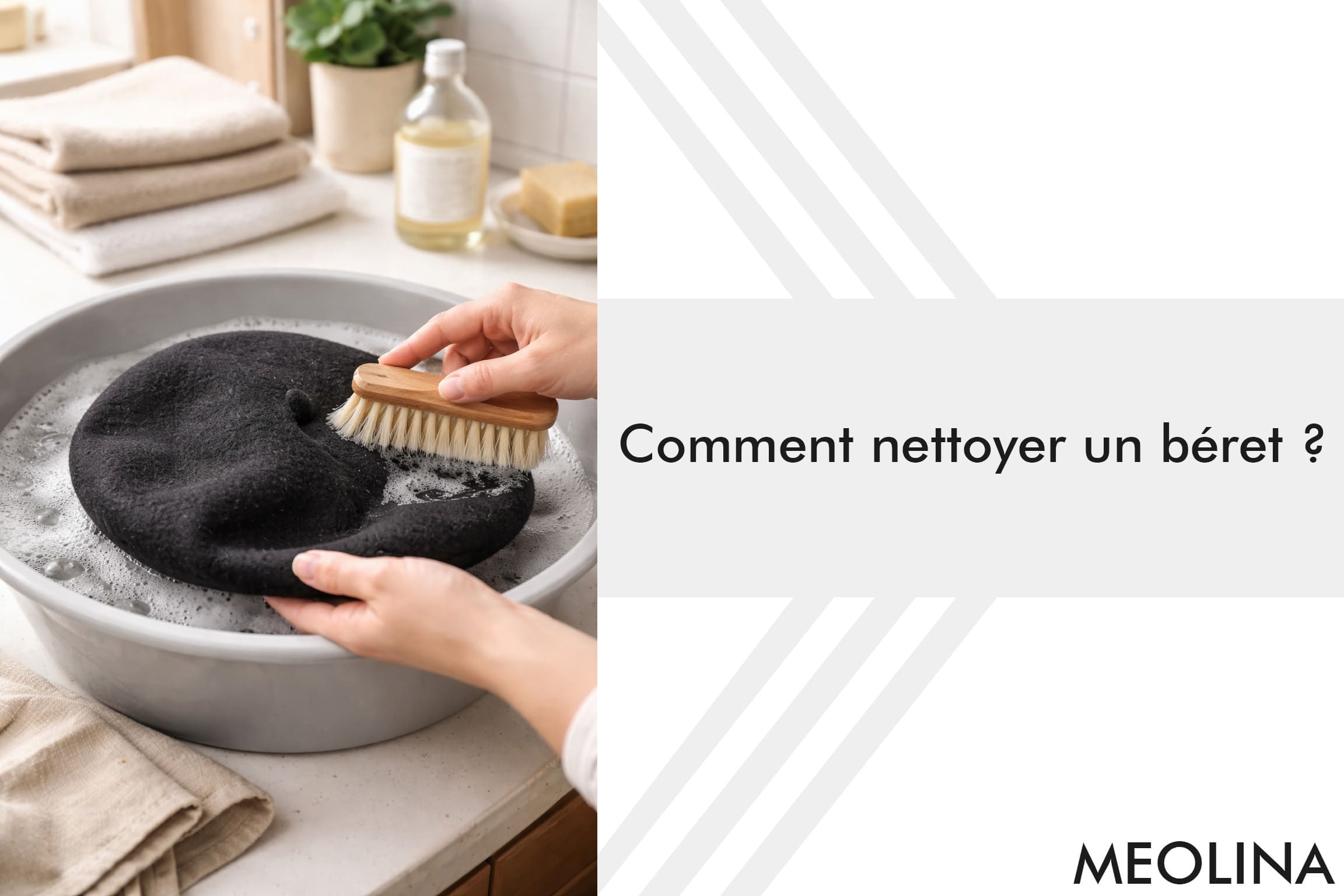
How to clean a beret?
Select the material of your beret to go directly to the appropriate advice.
The beret, an emblematic accessory in the French wardrobe, is often considered a delicate piece whose care raises a number of questions. Can a beret really be washed? The answer is yes. A beret can be cleaned, as long as the method used is appropriate to its composition.
However, this is not a one-size-fits-all, improvised gesture. Each material requires specific care, appropriate products and measured handling to preserve the beret's shape, texture and hold. In the following sections, we'll look in detail at the appropriate methods for cleaning wool, leather and cotton berets, focusing on good practices as well as mistakes to be avoided.
How to wash a wool beret?

Traditional French berets are generally made from felted wool or wool felt. This natural, dense and structured material gives the beret its characteristic hold. However, wool is sensitive to temperature variations, excessive friction and prolonged humidity. It must therefore be carefully and delicately cleaned.
Hand-cleaning: the recommended method
Hand-washing is the safest method for a wool or wool felt beret.
Preparing the water
Fill a basin with lukewarm water, ideally between 20 and 30°C. The water should never be hot, as heat encourages additional felting and fiber shrinkage.
Product selection
Use a detergent specially formulated for wool, or a mild, pH-neutral soap. Conventional detergents are too aggressive and damage the fiber's natural keratin.
Gentle cleaning
Immerse the beret without twisting or compressing it. Gently press the fabric into the soapy water to allow the product to penetrate. Avoid vigorous rubbing, twisting or rough shaking, which would irreparably deform the structure of the felt.
Treatment of localized stains
In the presence of a stain, gently dab the affected area with a clean cloth soaked in soapy water. Never rub in a circular motion, as this will create a more felted and visually irregular area.
Controlled rinsing
Rinse with clean water at the same temperature as the wash to avoid thermal shock. Use light pressure to remove soap residues. Never wring out the beret. To remove excess water, lay the beret flat on a clean towel, then roll gently to absorb moisture.
Drying and getting back into shape
Drying is a crucial step.
- Lay the beret flat on a dry surface, away from direct sunlight and any source of heat (radiator, hairdryer, fireplace).
- While still damp, gently reshape the beret to restore its original silhouette.
- Let dry naturally in the open air.
Hanging to dry is not recommended, as the weight of the water could alter the beret's circular shape.
Brushing and final care
Once perfectly dry, the felt can be lightly brushed with a soft textile brush in a uniform motion. This will even out the appearance of the felt and remove any residual dust.
What not to do
- Never put a wool or wool felt beret in the washing machine, even on the “wool” program.
- Avoid hot water or sudden temperature changes.
- Do not use bleach or strong detergents.
- Do not wring, rub or spin.
- Never tumble dry.
By respecting these principles, the wool beret retains its original shape, density and elegance, while being perfectly sanitized.
How to clean a leather beret?

A leather beret requires a fundamentally different kind of care from that required for textiles. Leather is a living material, naturally supple, but sensitive to excessive humidity, aggressive products and temperature variations. Unlike wool or cotton, it should never be immersed in water.
Surface cleaning: a non-immersion approach
Cleaning a leather beret is based on a localized, controlled treatment.
Preliminary dusting
Start by gently wiping the surface with a soft, dry cloth to remove dust and surface particles. This step prevents impurities from penetrating the material during wet cleaning.
Light cleaning
Lightly dampen a clean cloth with lukewarm water. It should be barely damp, never soggy. Sweep the cloth over the entire beret in smooth, even strokes, without over-emphasizing any particular area.
Using a specific product
For heavier soiling, apply a small amount of special leather cleansing milk or glycerine soap, previously tested on a small area. Spread the product with a soft cloth, using moderate circular movements. Remove excess with a clean, slightly damp cloth.
Controlled drying
After cleaning, allow the beret to air-dry in a temperate, well-ventilated environment.
- Never expose the leather to direct heat.
- Do not use a hair dryer or radiator.
- Avoid prolonged exposure to sunlight, which can dry out and stiffen the material.
Drying should be natural and gradual, to preserve the suppleness of the leather.
Nourishing and protecting the leather
Once the beret is perfectly dry, we recommend the application of a specific leather nourishing balm or cream. This step helps to :
- Maintain flexibility
- Prevent cracking
- Restore original shine
Apply a thin layer of product, allow to penetrate, then polish gently with a clean cloth.
Mistakes to avoid
- Never immerse a leather beret in water.
- Avoid machine washing.
- Do not use conventional detergents, alcohol or bleach.
- Do not scrub vigorously with a hard brush.
- Do not dry near a source of intense heat.
Careful, regular maintenance preserves the elegance, suppleness and longevity of a leather beret, without altering its structure or refinement.
How to wash a cotton beret?

A cotton beret has the advantage of being more resistant and tolerant than wool or leather. A supple, breathable plant fiber, cotton is better able to withstand water and handling, provided certain precautions are taken to preserve the beret's shape and fit.
Hand-wash: the preferred method
Even though cotton is relatively robust, hand-washing remains the safest solution and the one we recommend.
Water preparation
Use lukewarm water, ideally around 30°C. Excessive temperatures may cause shrinkage or structural damage.
Choice of detergent
Use a mild detergent suitable for delicate textiles. Overly aggressive products may weaken fibers and alter color intensity.
Cleaning
Immerse the beret in the water and gently press the detergent into the fabric. Cotton tolerates moderate rubbing if necessary, but this should be kept to a minimum to avoid distortion, especially on structured models.
Stain treatment
Apply a mild stain remover or a small amount of detergent directly to the affected area, then dab gently before washing.
Machine washing: possible but not recommended
Although some cotton berets can theoretically be machine-washed, subject to the instructions on the label, we are not in favor of this method.
The mechanical movements of the drum, even on delicate programs, as well as spin-drying, can alter the circular structure of the beret, causing it to sag or become irreversibly deformed.
If machine washing is nevertheless envisaged:
- Select a delicate program at 30°C maximum.
- Use a very moderate spin cycle.
- Place the beret in a washing net.
Rinsing and drying
After washing, rinse thoroughly with clean water to remove all traces of detergent. Do not wring out the beret. Gently squeeze out excess water, then wrap in a clean towel to absorb moisture.
Dry flat on a dry, well-ventilated surface. Carefully reform the beret when still slightly damp to preserve its silhouette.
We strongly advise against tumble-drying.
What to avoid
- Do not use water that is too hot.
- Avoid intensive spinning.
- Do not use aggressive bleaching products without first checking.
- Do not hang up a wet beret.
- Don't favor machine washing over more gentle manual care.
Careful maintenance ensures that your cotton beret will last longer and retain its original appearance.




Leave a comment